Isolated Single Hat Vector Illustration: A Practical Guide for Creators and Designers
You are likely staring at a blank canvas or a crowded design file, trying to find the perfect visual element that instantly communicates a specific vibe without cluttering the layout. This is where an isolated single hat vector illustration becomes your secret weapon. Unlike complex scenes or busy backgrounds, this type of graphic focuses entirely on one object—the hat—stripped of distractions. It is clean, scalable, and incredibly versatile, making it a staple asset for anyone who needs to convey style, profession, season, or identity quickly and effectively.
Whether you are designing a summer sale banner for a local boutique or creating educational materials about historical fashion, the ability to isolate a single hat in vector format offers distinct advantages. You aren't just getting a picture; you are getting a modular tool that adapts to your specific needs. From flat design aesthetics to modern 3D renderings like a 3d beach hat vector illustration, these assets bridge the gap between artistic expression and functional design requirements.
Understanding the Power of Isolation in Design
Why do professionals prefer isolated illustrations over cutouts from photos? The answer lies in control. When you work with a vector-based isolated hat, every curve, shadow, and highlight is defined by mathematical paths rather than pixels. This means you can resize the image from a tiny favicon to a massive billboard without losing a single line of quality. More importantly, isolation allows you to integrate the hat into any color scheme.
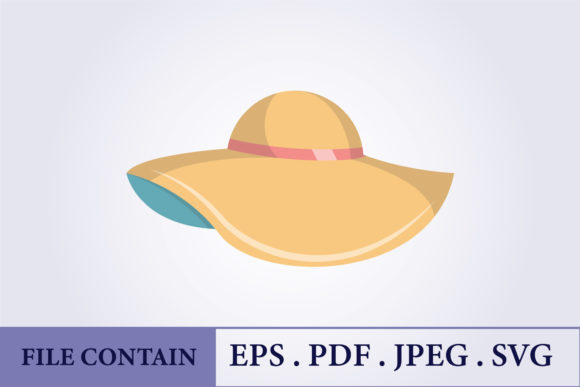
Imagine you are building a website for a travel agency. You need a hero section that screams "vacation." A standard photograph might have a sky background that clashes with your brand colors. However, if you use an isolated single hat vector illustration of a straw sunhat, you can instantly recolor the brim to match your company's primary blue or gold palette. The isolation removes the environmental context, leaving only the essential form, which gives you the freedom to place it anywhere—from the corner of a business card to the center of a mobile app interface.
Real-World Applications Across Industries
The utility of these graphics extends far beyond simple decoration. Different users leverage isolated hats to solve specific communication challenges in their daily workflows. Here is how various professionals put these assets to work in realistic scenarios.
Digital Marketing and E-Commerce
For online retailers, conversion is everything. When selling seasonal products, visual cues must be immediate. A marketer running a summer campaign doesn't need a full photo shoot; they need clear, crisp icons that signal "summer ready" instantly. An isolated single hat vector illustration serves as a powerful call-to-action icon next to discount codes or category links. If you are promoting swimwear, a flat-design straw hat suggests relaxation and warmth without requiring the user to read a paragraph of text. Furthermore, using a 3d beach hat vector illustration adds depth and tactile appeal to product pages, making the digital item feel more tangible and desirable to potential buyers.
Educational Content and Storytelling
Educators and content creators often struggle to keep students engaged with dense text. Visual aids break up the monotony and help anchor concepts in memory. In a history lesson about the Victorian era, a detailed vector hat can illustrate social status or regional differences better than a textbook description. Similarly, in a children's book about fashion or professions, an isolated chef's hat or a firefighter's helmet instantly identifies a character's role. Because vectors are editable, teachers can modify the hat's color to fit the story's theme or simplify the design for younger audiences who benefit from cleaner lines.
Personal Branding and Freelancing
Freelancers and small business owners know that personal branding requires consistency across all platforms. A blogger writing about travel or lifestyle might use an isolated hat as a recurring motif in their newsletter headers, podcast cover art, or social media templates. This creates a recognizable visual signature. Instead of relying on stock photos that everyone else uses, selecting a unique vector style—perhaps a minimalist line-art fedora or a vibrant 3D bucket hat—helps establish a distinct voice. It signals attention to detail and a professional approach to visual storytelling.
Gaming and Interactive Media
In the world of indie game development and app design, assets need to be lightweight yet expressive. Game developers frequently use isolated hat vectors as inventory items or character customization options. Since the file size of vector graphics is typically smaller than high-resolution raster images, they load faster, improving the user experience. A player might unlock a new "pirate hat" or "wizard hat" in a game, and having the base design as an isolated vector allows the developer to easily apply different textures or lighting effects without rebuilding the model from scratch.
Navigating Design Styles: Flat vs. 3D
When searching for the right asset, you will encounter two dominant styles: flat design and 3D rendering. Understanding the difference helps you choose the tool that fits your project's tone.
Flat design is characterized by its simplicity. It uses solid colors, minimal shading, and clean lines. This style is timeless and works exceptionally well for user interfaces (UI), infographics, and corporate presentations. An isolated single hat vector illustration in flat design conveys information efficiently. It is unobtrusive and ensures that the focus remains on the content surrounding it. If you are designing a mobile app where space is limited, flat hats are the go-to choice because they don't compete visually with other interface elements.
In contrast, a 3d beach hat vector illustration or any 3D-rendered hat brings volume, texture, and realism to the table. These assets utilize gradients, shadows, and highlights to create the illusion of depth. They are ideal for landing pages, promotional banners, and marketing materials where you want to grab attention immediately. The 3D style mimics physical reality, which can make products look more premium and appealing. However, they require more careful placement to avoid looking out of place in a minimalist layout.
Key Considerations Before You Download
Before you add a hat to your project, there are practical factors to consider to ensure it serves its purpose effectively. First, check the file format. True vector files should be in SVG, EPS, or AI formats. These allow you to scale the image infinitely. If you download a PNG or JPEG thinking it is a vector, you may find yourself stuck with pixelated edges when you try to enlarge it for a print ad.
Second, think about the editing flexibility. Can you easily change the colors? Are the layers separated so you can adjust the brim width or the band independently? A high-quality isolated hat illustration will have grouped layers, giving you the power to tweak the design to match your specific brand guidelines. Don't settle for a flattened image where every part is locked together.
Finally, consider the licensing and usage rights. While many free resources exist, commercial projects often require a paid license to ensure you are legally allowed to use the image for profit. Always verify the terms before downloading. For freelancers and businesses, investing in a high-quality, properly licensed asset saves time and legal headaches down the road.
Making the Most of Your Assets
The true value of an isolated single hat vector illustration isn't just in owning the file; it's in how creatively you apply it. Think beyond the obvious. Use a hat icon to mark a "new arrival" section in your e-commerce store. Turn a collection of different hat styles into a timeline of fashion history for a blog post. Create a set of avatars for your team by assigning each member a different hat style that represents their personality or role.
By treating these illustrations as flexible building blocks rather than static decorations, you unlock a level of creativity that elevates your work. Whether you need the crisp precision of flat design or the engaging depth of a 3D render, having access to high-quality isolated hats empowers you to communicate your message clearly and professionally. So, the next time you face a design challenge, remember that sometimes the simplest solution—a single, perfectly isolated hat—is exactly what your project needs to stand out.