3D Render Symbol Calendar of Number 27: A Comprehensive Guide for Planners and Designers
In the realm of digital planning and visual organization, the 3D Render Symbol Calendar of Number 27 has emerged as a distinct asset for professionals seeking to elevate their daily schedules. Unlike standard flat typography or generic clip art, this specific design element offers a tactile, three-dimensional aesthetic that transforms a simple date into a focal point. Whether you are managing a complex project timeline, creating a personal productivity tracker, or designing marketing materials that require a sense of depth, understanding the unique properties of this 3D render is essential.
This article explores the functional and aesthetic value of the 3D Render Symbol Calendar of Number 27, comparing it against traditional calendar tools and static graphic assets. We will examine how its specific file formats support various workflows, discuss the tradeoffs between high-fidelity renders and simpler alternatives, and help you determine if this resource fits your current needs.
Distinguishing Features of the 3D Render Symbol
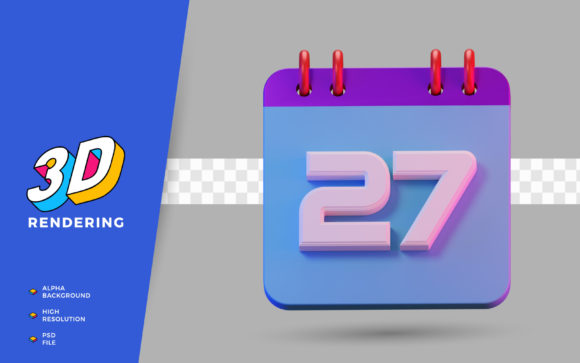
The primary distinction of the 3D Render Symbol Calendar of Number 27 lies in its dimensional quality. In a digital environment where screens are inherently two-dimensional, adding depth through 3D rendering creates an illusion of physical presence. This number is not merely a digit; it is a modeled object with lighting, shadows, and texture that suggest volume. This characteristic makes it particularly effective for designs that need to break the monotony of standard grid layouts.
When compared to standard vector icons or flat PNGs, the 3D version provides a level of realism that can enhance user engagement. For instance, in a daily reminder app or a printed planner, a 3D number draws the eye more effectively than a flat color block. The symbol is designed to be isolated, meaning it stands alone without a background, allowing for seamless integration into diverse compositions. This isolation is crucial for designers who need to place the number on top of busy backgrounds, photographs, or textured papers without worrying about white borders or awkward cropping.
File Formats and Workflow Integration
One of the most significant advantages of acquiring the 3D Render Symbol Calendar of Number 27 is the variety of professional-grade files included in the package. The decision to use this asset often hinges on the software ecosystem a user employs. The inclusion of multiple formats ensures compatibility across different stages of the creative process.
- HD PSD (Photoshop Document): The inclusion of a layered PSD file is a major benefit for users who require maximum flexibility. With this format, designers can adjust individual layers, modify blending modes, or alter specific effects without losing the integrity of the original render. It allows for deep customization, enabling users to change the lighting direction or tweak the material properties to match a specific brand palette.
- PNG with Alpha Background: For quick insertion into presentations, social media posts, or web graphics, the transparent PNG is indispensable. The alpha channel ensures that the edges of the 3D number are crisp and free from pixelation. This format is ideal for users who do not have access to advanced editing software but still need high-quality visuals.
- JPEG 300 dpi: High-resolution JPEGs are critical for print applications. The 300 dots per inch resolution guarantees that the 3D Render Symbol Calendar of Number 27 remains sharp when printed on flyers, business cards, or large-format posters. This eliminates the common issue of blurry text that occurs when low-resolution images are scaled up.
Compared to other resources that might only offer a single image type, this multi-format approach saves time. Users do not need to search for separate files for web and print; they have everything required to execute a campaign from start to finish within one download.
Comparing Approaches: 3D Renders vs. Alternatives
When evaluating options for daily reminders or planning tools, users typically face a choice between using custom 3D assets like the 3D Render Symbol Calendar of Number 27 and relying on pre-built templates or stock illustrations. Each approach carries specific strengths and limitations that depend on the project's scope.
Customization and Uniqueness
Stock calendars and generic templates often suffer from overuse. If you choose a widely available template, there is a risk that your audience may have seen similar designs elsewhere. In contrast, utilizing a specific 3D render allows for a unique visual identity. Because the 3D Render Symbol Calendar of Number 27 is an isolated object, it can be manipulated to fit a specific theme—whether that is a corporate minimalist look or a vibrant, playful layout. This level of control is rarely possible with rigid, all-in-one calendar templates.
Technical Complexity and Effort
However, the benefits of 3D assets come with a tradeoff in terms of technical effort. While a pre-made calendar template requires only filling in dates, integrating a 3D render requires a certain level of proficiency in design software like Photoshop or Affinity Photo. The user must understand how to layer objects, manage shadows, and ensure the lighting of the number matches the rest of the composition. For individuals without design experience, this learning curve can be a barrier. In such cases, simpler alternatives like drag-and-drop online planners might be more practical, even if they lack the visual impact of a 3D symbol.
Visual Weight and Focus
In terms of visual hierarchy, the 3D render excels at drawing attention. A flat number might blend into a list of tasks, but a 3D object with highlights and shadows naturally commands focus. This makes the 3D Render Symbol Calendar of Number 27 an excellent choice for highlighting a specific deadline, a special event, or a "day of importance" within a larger schedule. Conversely, if the goal is to display a long-term view of many days, using 3D symbols for every single date could create visual clutter. In those scenarios, a clean, flat typographic style is often superior for readability.
Decision Factors: When to Choose This Asset
Selecting the right tool for planning involves analyzing the end goal of the design. The 3D Render Symbol Calendar of Number 27 is not a universal solution for every scenario, but it shines in specific contexts.
Ideal Use Cases
This asset is best suited for projects requiring high visual impact. Marketing campaigns celebrating a milestone, promotional materials for a product launch scheduled on the 27th, or high-end editorial layouts benefit greatly from the premium feel of 3D rendering. The ability to use the file for both personal and commercial use adds to its value, making it a versatile choice for freelancers and agencies alike. The absence of watermarks or logos ensures that the final output looks professional and unbranded by third-party services.
Limited Scenarios
There are situations where this asset might not be the optimal choice. If the design system demands strict adherence to accessibility standards where high contrast and simplicity are paramount, a heavy 3D effect might reduce legibility for some users. Additionally, for mobile-first applications where screen real estate is limited, the detailed shading of a 3D render might consume too much processing power or obscure important text. In these cases, a simplified vector icon or a flat design system would be more appropriate.
Practical Application and Implementation
Implementing the 3D Render Symbol Calendar of Number 27 is straightforward once the correct workflow is established. The process typically begins with importing the file into the chosen design application. Using the HD PSD allows for granular adjustments, such as changing the color tone to match a company's branding guidelines. For users working in Affinity Photo, the same principles apply, offering a robust alternative to industry-standard software.
The key to successful integration is consistency. Once the 3D number is placed, it should be treated as a physical object within the scene. This means ensuring that the shadow cast by the number aligns with the light source of the surrounding elements. Ignoring these details can make the design look disjointed, undermining the realistic quality of the render. By paying attention to these nuances, users can create a cohesive look that feels intentional and polished.
Furthermore, the versatility of the PNG with alpha background allows for rapid prototyping. Designers can quickly test different background colors and textures to see how the number interacts with various environments before committing to a final layout. This iterative process helps refine the visual impact of the 3D Render Symbol Calendar of Number 27, ensuring it serves its purpose effectively.
Evaluating Value and Long-Term Utility
When comparing the 3D Render Symbol Calendar of Number 27 to other digital assets, the long-term utility becomes apparent. Unlike temporary fonts or short-lived trends, a well-rendered 3D number is a timeless element that can be repurposed across multiple projects. Its high resolution and lack of watermarks mean it can be used indefinitely without additional licensing concerns.
For professionals who frequently update their portfolios or maintain a consistent brand identity, having a library of high-quality 3D elements is invaluable. The ability to quickly insert a visually striking number into a new design saves hours of work that would otherwise be spent modeling from scratch or searching for compatible stock imagery. This efficiency translates directly to better project outcomes and reduced turnaround times.
In conclusion, while no single asset solves every design challenge, the 3D Render Symbol Calendar of Number 27 offers a compelling option for those seeking to add depth and sophistication to their planning and design work. Its combination of high-quality formats, isolated design, and commercial usability makes it a strong contender in the market for digital planning tools. By carefully considering the specific needs of a project—balancing visual impact with readability and technical feasibility—users can make informed decisions that leverage the full potential of this resource.