3D Render Symbol Calendar of Number 1: A Comprehensive Guide to Digital Planning Assets
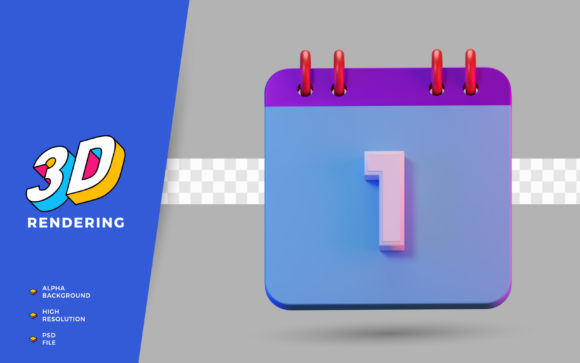
In the rapidly evolving landscape of digital design and content creation, visual hierarchy plays a pivotal role in capturing attention. Among the myriad of graphical elements available, the 3D Render Symbol Calendar of Number 1 stands out as a versatile asset for professionals seeking to emphasize new beginnings, top rankings, or specific daily reminders. Whether you are designing a marketing campaign, creating educational materials, or developing a personal productivity tool, understanding the nuances of high-quality 3D assets is essential. This article explores the technical specifications, practical applications, and creative workflows associated with this unique digital symbol.
The Evolution of Digital Calendar Icons
Gone are the days when flat, two-dimensional icons sufficed for all design needs. As user interfaces become more immersive and physical products rely on photorealistic mockups, the demand for depth and texture has surged. The 3D Render Symbol Calendar of Number 1 represents a shift towards hyper-realism. By utilizing advanced rendering techniques, designers can create objects that mimic light refraction, shadow casting, and material textures like plastic, metal, or glass.
This transition from 2D to 3D is not merely aesthetic; it serves a functional purpose. In a crowded information environment, a three-dimensional object draws the eye naturally. It suggests importance and tangibility. For instance, a flat number "1" might be overlooked in a dense infographic, but a rendered 3D calendar block featuring the number one commands immediate focus. This makes it an ideal choice for highlighting the first day of a month, a "Day One" challenge, or a primary ranking position.
Technical Specifications and File Versatility
When acquiring digital assets for professional use, the quality and format of the files are just as critical as the visual design itself. The 3D Render Symbol Calendar of Number 1 typically comes packaged in a suite of formats designed to accommodate various software environments. Understanding these formats ensures that the asset remains crisp and usable across different mediums.
- File HD PSD: The Photoshop Document (PSD) file is a powerhouse for editors who need granular control. This format often contains layered information, allowing users to isolate specific elements of the 3D render. Professionals can adjust blending modes, apply custom lighting effects, or integrate the symbol into complex composites without losing resolution.
- File PNG with Alpha Background: Transparency is key for web and mobile design. A PNG with an alpha channel provides a clean cutout of the 3D calendar symbol, free from any rectangular borders or background noise. This allows for seamless placement over colored backgrounds, photographs, or gradient meshes, ensuring the design looks native to the platform.
- File JPEG 300 dpi: For print media, resolution is paramount. A JPEG file at 300 dots per inch (dpi) guarantees that the image will remain sharp when printed on business cards, brochures, posters, or packaging. This high-resolution standard prevents pixelation, maintaining the integrity of the 3D details even at small sizes.
The inclusion of a watermark-free guarantee is equally significant. Watermarks can detract from the professionalism of a final product and may violate licensing agreements if not removed properly. Receiving clean files directly empowers creators to produce polished work immediately upon download.
Creative Workflows: Integrating 3D Objects
One of the most common questions regarding high-end assets is how to integrate them effectively into existing projects. The process of adding a 3D Render Symbol Calendar of Number 1 to a project is streamlined by modern graphic design tools. Once the files are downloaded, the workflow becomes intuitive, whether using industry-standard software like Adobe Photoshop or cost-effective alternatives like Affinity Photo.
The integration process typically involves importing the PNG file with the alpha background into the design canvas. Because the background is already transparent, there is no need for time-consuming masking or erasing. Designers can then resize the object while holding the shift key to maintain aspect ratio. To achieve a truly cohesive look, adjustments to shadows and highlights are recommended. Adding a subtle drop shadow beneath the 3D calendar symbol helps ground it in the scene, preventing it from appearing to float unnaturally above the content.
For those working with the PSD file, the layering capabilities offer even more flexibility. Users can experiment with overlay effects, such as changing the color tint of the 3D object to match a brand's color palette. This adaptability transforms a generic stock asset into a custom-branded element. Furthermore, the ability to manipulate the file in layers allows for the creation of animations, where the calendar symbol can be rotated or scaled to create dynamic motion graphics for social media stories or website headers.
Practical Applications Across Industries
The utility of the 3D Render Symbol Calendar of Number 1 extends far beyond simple decoration. Its application spans a diverse array of sectors, each leveraging the symbol to communicate specific messages efficiently.
Marketing and Advertising
In the realm of marketing, the number one is synonymous with leadership, priority, and excellence. Brands launching a new product or service often use the calendar symbol to indicate a launch date. A 3D render adds a sense of anticipation and value. For example, a fitness brand might use the symbol to mark "Day One" of a transformation program, creating a visual anchor for their campaign timeline. The tactile feel of the 3D object makes the promise of the product feel more tangible and achievable.
Educational Resources
Educators and instructional designers frequently utilize visual aids to structure learning materials. The calendar symbol can serve as a visual cue for the start of a module, a weekly schedule, or a milestone in a curriculum. When creating interactive PDFs or e-learning modules, embedding a high-quality 3D icon helps break up text-heavy content, keeping learners engaged. The distinct shape of the number one within a calendar context clearly signals the beginning of a sequence, aiding cognitive processing.
Business and Productivity Tools
For business owners and entrepreneurs, planning is the backbone of success. Digital planners, habit trackers, and project management dashboards benefit immensely from premium visual assets. A 3D calendar icon can denote the current day, a deadline, or a key performance indicator (KPI). In presentations, replacing standard bullet points with a 3D rendered calendar symbol for the number one can elevate the perceived quality of the slide deck, signaling attention to detail and professional standards.
Content Creation and Social Media
Social media algorithms favor content that captures attention quickly. Creators on platforms like Instagram, TikTok, and LinkedIn often use static images or short videos to promote their services. The 3D Render Symbol Calendar of Number 1 is perfect for "Tip of the Day" series, countdowns, or announcing a new feature release. The isolated nature of the PNG file allows creators to place the symbol on any background, ensuring brand consistency regardless of the platform's color scheme.
Considerations for Commercial and Personal Use
A critical aspect of selecting digital assets is understanding the licensing terms. The availability of the 3D Render Symbol Calendar of Number 1 for both personal and commercial use offers significant freedom to creators. This dual-licensing model means that hobbyists can use the asset for personal projects, such as scrapbooking or home decor designs, while businesses can incorporate it into client deliverables, merchandise, or advertising campaigns without additional fees.
However, it is important to adhere to the spirit of the license. While the asset can be used commercially, it generally cannot be resold as a standalone digital file or redistributed in a way that competes with the original creator. The value lies in how the asset is integrated into larger works. By transforming the raw 3D render into a unique design solution, users add value and respect the intellectual property rights of the source.
The Impact of Quality on Perception
There is a psychological component to design quality. Audiences subconsciously judge the credibility of a message based on the visual fidelity of its components. A blurry, low-resolution icon can undermine the authority of a brand or the clarity of an educational concept. Conversely, a sharp, well-rendered 3D object communicates competence and care.
The 3D Render Symbol Calendar of Number 1 exemplifies this principle. The high-definition rendering captures the interplay of light and shadow, giving the object a presence that feels real. This realism builds trust. When a user sees a high-quality 3D calendar icon on a website or in a document, they are more likely to perceive the associated content as reliable and valuable. In a competitive market, these subtle visual cues can be the difference between engagement and indifference.
Future Trends in 3D Graphic Assets
As technology advances, the line between 2D and 3D continues to blur. We are seeing a rise in "2.5D" designs, which combine flat aesthetics with subtle depth cues. However, full 3D renders remain dominant in areas requiring high impact. The trend towards realistic textures, soft lighting, and environmental reflections is expected to grow. Assets like the 3D Render Symbol Calendar of Number 1 are poised to remain relevant as designers seek ways to inject personality and dimension into their work.
Furthermore, the integration of 3D assets into augmented reality (AR) experiences is becoming increasingly common. While the current files are optimized for screen and print, the principles of high-quality 3D modeling ensure that these assets are compatible with future AR applications. A designer today who masters the manipulation of 3D calendar symbols is preparing their skillset for the immersive web of tomorrow.
Conclusion
The 3D Render Symbol Calendar of Number 1 is more than just a decorative element; it is a strategic tool for communication. Its versatility, combined with high-resolution file options and flexible licensing, makes it an invaluable resource for a wide range of users. From educators structuring lesson plans to marketers launching new initiatives, the ability to seamlessly integrate a high-quality 3D object enhances the overall effectiveness of visual content.
By leveraging tools like Photoshop or Affinity Photo, users can customize these assets to fit their unique brand identities and project requirements. The result is a cohesive, professional, and engaging visual experience that resonates with audiences. As we continue to navigate a visually saturated world, the importance of quality, clarity, and creativity in design cannot be overstated. Utilizing premium assets ensures that your message is not only heard but seen and felt.